Read this before ordering a DIY genetics kit
Screenshot 2019-09-06 at 10.03.13.png

DNA testing used to be something distant and scientific that cropped up in TV crime series like CSI: Crime Scene Investigation or in family dramas where a child’s parentage was in doubt. Today it’s perfectly easy, and relatively cheap, to send away for a kit to check out our own genetic makeup.

You might think about doing this because you want to know more about your family background, having binge watched a programme like Who Do You Think You Are? Or perhaps you're curious to know whether you have the gene for certain diseases or conditions.

Exploring your family history is usually a benign activity, unless it uncovers an unsettling family secret. But digging into the health aspects of your genome just because you’re curious – rather than for clinical reasons, under the advice of a doctor – could be ill advised.

That’s not just because there have been doubts in the past over the reliability of commercially marketed testing, or because the psychological and medical impact of a worrying finding is better handled when the testing is with the knowledge of your doctor. It’s also because such tests can have consequences for you as a consumer of life insurance products such as death, trauma and income protection. 

The question to consider before undertaking a medically focused (but optional) genetics test is whether you’d have to disclose the results in any future life insurance application.

This is especially important if you’re younger and haven’t yet taken out such cover. When you do decide to apply for this sort of insurance, the insurer will ask a range of questions aimed at assessing the degree of likelihood they’ll have to pay out in the future.

One question will be about pre-existing conditions. Another may be the catch-all ‘anything else we should know about’ question that insurers ask as they decide who and what they’ll cover. Your ‘duty of disclosure’ could mean you have to share the results of your genetics test at the time of application, or whenever you change your contract.

If the testing has shown you have the potential to develop a particular disease or condition, the insurer may decide to charge you a higher premium because you’re a higher risk. 

The rules differ depending on where you live, with some countries banning or restricting life insurers’ use of genetic results but others still permitting it. So, ask these questions of your insurer or local consumer agency before you go ahead with a genetic test:

  • I may apply for a life insurance product one day. Will I be legally required to disclose all genetic test results to the insurer?

  • I already have life insurance. In what circumstances would I be required to disclose new genetic test results – for example, if I wanted to increase my cover?

  • I already have life insurance. Is it ‘guaranteed renewable’ – that is, once I’m covered the insurer can’t change the contract just because of new information?

Never be deterred from taking a test your doctor advises is necessary. But if it’s just curiosity getting the better of you, make sure you’re fully informed about the potential financial impact of sending off for a DIY genetics kit. 

Check out more of the latest news from IFAMAX:

Pay less attention to weather forecasts

How women view money and investing differently

A little encouragement goes a long way

Why stick with a losing proposition?
Sunk Costs - IFAMAX.jpg

We all know we shouldn’t throw good money after bad, but we do it all the time.

Perhaps you’ve made yourself sit through a bad movie purely because you felt that having paid for the ticket you didn’t want to be left with a sense of money down the drain? Or, for the same reason, you’ve read a whole book despite deciding by the end of Chapter 1 that you weren’t going to enjoy it.


The sunk cost fallacy

Behavioural economists call this tendency among people to stick with losing propositions as the sunk cost fallacy. You see it all the time in consumer finance, investment and business.

Think of the person who buys a motor vehicle that turns out to be a lemon. The buyer constantly is sending the car to the garage to be fixed. Yet every time it comes back from the mechanic something else goes wrong. The consumer would have been writing it off early in the piece.


Investors are affected too

This happens with investments as well. People will get overly attached to losing stocks and refuse to sell them, purely because they feel they have already stuck with them for so long and want to believe that at some point they will turn around.

There are a few ways of overcoming this tendency. One is not to become emotionally attached to investments. A bad movie doesn’t stop being a bad movie just because you doggedly opt to sit through the entire feature. Your money is gone; now you’re wasting your time as well.

A second approach is to look to the future, not the past. Maybe the next movie will be better. A third idea is diversification. Accept that not every movie you see is going to hit the mark. But if you see a range of them, something might take your fancy.


See the big picture

A final way of framing this challenge is to think of the big picture. People tend to place a higher value on what they might lose rather than on what they stand to gain. Walking out on a bad movie opens up the possibility of a better experience doing something else.

Bad movie or bad investment, that money and time wasted is gone. You can’t do anything about it. But you still have options and choices. And that starts with writing off a losing proposition.

Check out more of the latest news from IFAMAX:

Pay less attention to weather forecasts

How women view money and investing differently

A little encouragement goes a long way

The pounds and pennies myth
pawan-kawan-v2hRGD0sp6E-unsplash.jpg

There’s a well-known phrase that’s often used when the topic of budgeting comes up: “Watch the pennies and the pounds will take care of themselves.”

It’s true that small expenses — a posh latte here and a takeaway there — do add up. But the outgoings that people really need to focus on are the major ones. In most cases, it’s what they spend on their homes and cars which has the biggest impact on how much money they have left at the end of each month.

In other words, it’s far more important look at the pounds (and the hundreds of pounds) you’re spending before the pennies.

But, as the financial writer Andrew Craig explains to Robin Powell in this video, the first step to taking control of your expenditure is to start a spreadsheet showing all the money you spend each month.

It doesn’t matter how big your income is; if there’s more money going out than you have coming in, you could be heading for trouble.


This is one of many videos you will find on the IFAMAX YouTube channel. They cover a wide range of subjects, from investing to sustainability and personal finance. We’re regularly adding new videos, so why not subscribe to ensure you keep up to date?


Video transcript:

It’s well documented that, all over the world, levels of financial literacy need improving.

The good news is that, by investing a modest amount of time in researching this subject, you can improve your finances substantially.

Andrew Craig runs a financial education website called Plain English Finance. He was inspired to start it while working in the City of London.

Andrew says: “One of the things that really came home to me in doing that was, even people in the city had a really kind of bad nuts-and-bolts understanding of their personal finances. What is an ISA? What is a pension? What are stock markets? What’s inflation? What are interest rates?

“I started Plain English Finance as a sort of angry young man, as a reaction to that. And our guiding principle ever since I did that has really been to improve the financial affairs of as many people as we can.”

What then, according to Andrew, are the most important personal finance rules to follow?

He suggests there are two main ones.

“Rule number one is: don’t spend more than a third of your income on your house — which is something that sounds a bit crazy to people these days because we’re so obsessed with homeownership in Britain — because rule number two is: you should basically always invest ten percent of your income in investment products that aren’t your house. And a lot of people, in spending vastly more of a third of their income on a roof over their head find that they then can’t afford to save and invest ten percent of their money in investments.”

Saving or investing ten percent of what you earn can be a challenge.

The best way to tackle it, says Andrew, is to start a spreadsheet showing all your monthly outgoings.

You should then focus on trying to reduce the biggest numbers.

Andrew says: “Rather than trying to save money on how many cappuccinos you buy everyday... or, you know, going to Lidl instead of Waitrose... which is all very laudable; actually, the single easiest way... there are two things that are very easy to change if you’re willing to live in a less fashionable neighbourhood and perhaps a slightly smaller house or flat, is — number one — the biggest number is invariably the roof over your head.

“And then the second one down the spreadsheet from that tends to be cars. Too many people... dare I be slightly sexist, particularly men, rush to buy a really flash, expensive car prematurely.”

For more tips on keeping your finances in shape, you can always visit Andrew Craig’s website.

You’ll find it at plainenglishfinance.co.uk.

Check out more of the latest news from IFAMAX:

Pay less attention to weather forecasts

How women view money and investing differently

A little encouragement goes a long way

Picture: Pawan Kawan via Unsplash

Financial decluttering – Step 5 – A streamlined new start

In step 5 of our financial decluttering drive it’s time for the big reveal. Our volunteer, business coach Nicola Wilkes came to us with several folders packed with paperwork and a shaky grasp of what was in them. Here we'll see what she gets back, discuss her next steps and make sure her financial paperwork stays minimal and manageable.

Ifamax -- Protecting your wealth for a secure retirement www.ifamax.com -- Connect with us -- LinkedIn: https://www.linkedin.com/company/ifamax-limited/ Twitter: https://twitter.com/ifamax - Transcript - - Disclaimer - Where Ifamax provides advice, that advice is in writing. This video, however, is generic, and not intended as advice.

If you are an existing client we may have worked on decluttering your finances before. All existing clients can take up this service at any point in time.

Receive the whole video series in your inbox click here.

Check out the other steps here on IFAMax:

Step 1 - How we’ll tackle your paperwork

Step 2 -Show us what you’ve got

Step 3 - Keep, scan, can

Step 4 - Lightening the load

Step 5 - A streamlined new start

Don't get caught out by the weather
rain-umbrella-weather-17739.jpg

Ever been on holiday where the weather wrong-footed you? The brochures promised tropical bliss, so you packed accordingly. Instead, you are greeted by bone-chilling wind and rain. Shivering and exposed, you resemble an undiversified investor.

As with the weather, financial markets can be unpredictable. Yet, in their own glossy brochures, investment providers often promise the equivalent of endless sun. Excited, investors pile in like bucket shop holidaymakers. This rarely ends well.

But there’s an answer to this cycle of unrealistic hope and illusion-shattering reality. It’s called diversification. Described by Nobel laureate Harry Markowitz as the only free lunch in investing, diversification is the equivalent of an all-weather wardrobe.

Smart holiday-makers, knowing that resort weather is never as consistently glorious as the marketing suggests, will pack for a range of climes. Alongside the shorts, sunscreen and T-shirts will be warm sweaters, umbrellas, and novels for rainy days. 

Likewise, diversified investors will not hang their hopes on one asset class, or one sector, or one country, or one stock. They’ll spread their exposure across and within stocks and bonds, across different markets, industries and currencies.

Diversification increases the reliability and predictability of returns. Looked at another way, it smooths the way and reduces the sudden bumps in the investing road. The ups may be less spectacular, but the downs will also be less stomach-churning.

Like well-prepared travellers, diversified investors are ready for a range of outcomes. If the stock market is roaring ahead, they can have sufficient exposure to enjoy the benefits of that growth. But when stocks are down, they can also be protected under the relative shelter of government bonds.

Diversification works because different parts of financial markets aren’t perfectly correlated. As one asset class goes down, another may go up. Stocks, a growth asset, and bonds, a defensive one, are the classic example.

But diversification also applies within asset classes. In your stock portfolio, you can spread your risk across sectors. Instead of putting everything in technology or materials or financials, you can have a bit of everything. And instead of sticking to one country, you can diversify internationally, across developed and emerging markets.

You can diversify within a bond portfolio as well, spreading your holdings between government and corporate bonds, between long-term bonds and short-term bonds and between bonds of higher credit and lower credit.

And if you really must cut the holiday short because of an emergency at home or some other unpredicted event, you can have a portion of your investments in cash.

Ultimately, diversification works because you are giving yourself more choices. You are less reliant on any one variable. In this way, you are reducing idiosyncratic risk relating to single industries or stocks or countries.

Think of what happened during the tech boom of early this century. Piling into technology stocks worked very well, until it didn’t. At that point, many investors were left like a sun-seeker in an Ibiza cold snap with a suitcase full of swimsuits and sandals.

There is still residual risk related to the market itself, of course. This so-called systematic risk is something you can’t diversify away. But the main point is you should do everything you can to increase the reliability of outcomes and eliminate risks you simply don’t need to take.

The outcome is greater peace of mind and an understanding that when markets get unsettled, as they inevitably do from time to time, you’ve packed your portfolio for a range of eventualities. 

Call it all-weather investing.

Check out more of the latest news from IFAMAX:

Pay less attention to weather forecasts

How women view money and investing differently

A little encouragement goes a long way

Financial decluttering – Step 4 – Lightening the load

Step 4 of our financial decluttering process is the part where you get to say goodbye to the unnecessary paperwork that’s been cluttering up your house and life. We’ve digitised the paperwork that can be kept as a soft copy and now it’s time to shred the superfluous.

Ifamax -- Protecting your wealth for a secure retirement www.ifamax.com -- Connect with us -- LinkedIn: https://www.linkedin.com/company/ifamax-limited/ Twitter: https://twitter.com/ifamax - Transcript - - Disclaimer - Where Ifamax provides advice, that advice is in writing. This video, however, is generic, and not intended as advice.

Receive the whole video series in your inbox click here.

If you are an existing client we may have worked on decluttering your finances before. All existing clients can take up this service at any point in time.

Check out the other steps here on IFAMax:

Step 1 - How we’ll tackle your paperwork

Step 2 -Show us what you’ve got

Step 3 - Keep, scan, can

Step 4 - Lightening the load

Step 5 - A streamlined new start

Can you predict short-term movements in stock prices?
Stock prices.png


What will happen in the global financial markets tomorrow, next week or over the coming month?  It’s tempting to speculate, isn’t it? Indeed, speculation about the short-term direction of shares, bonds, currencies and commodities represents a good chunk of the output of the financial media every day.

To be fair, people have a natural curiosity about the future, particularly when their is money at risk. This makes it understandable that the media would seek to satisfy that need in its coverage.

Markets are inherently uncertain

The problem is financial markets are inherently uncertain. Prices move randomly in the short term and there is little to be gained for investors by trying to second-guess them.

This point is easier to understand if you reflect on the fact that what moves prices is news. It might be an earnings report involving an individual company, a regulatory ruling affecting an industry, a data release relating to an entire economy or a geopolitical development that affects the whole world. 

Prices are always changing as new information comes into the market. And the biggest changes in prices tend to occur on the news that no-one expected. For example, opinion polls might suggest a certain political party is certain to win a major election. Markets will price for that eventuality. But if there is an upset, prices will adjust very quickly.

An impossible task

What this means is that successfully speculating on short-term movements in security prices with any consistency requires an ability to accurately forecast the news. We’re not sure about you, but we’ve yet to meet such a person.

But it’s even harder than that! Even if you could forecast the outcome of news events — say a G7 statement or an interest rate change or a merger — you still need to be able to forecast how the market will react.

Now that’s especially tough because what moves prices is the degree to which the news lines up with what’s priced in. You might get a weak employment figure, for instance, but the share market might still rally if the headline figure is not outside the bounds of expectations.

The fiendish difficulty of forecasting markets is also partly because set-piece events that dominate media attention do not tend to occur in isolation. A big economic announcement might have been expected all week, but what if it is overshadowed on the day by a development in the Middle East that upends the oil market and drives equity prices lower?

We look for tidy narratives

In fairness, we doubt the media will ever give up on constructing speculative “stories” about markets by linking fundamental news about the economy or earnings to price changes. It fills a niche and there’s a real appetite among the public for tidy narratives that link cause and effect.

But for the individual investor it is best to distinguish between the daily noise of news and security price movements from the long-term signal of capital market returns. The latter are more predictable.

We know that over time, there is a return on investment. If capital markets did not ultimately reward investors, there would be no appeal in investment!

But the returns are not there every day, every week or even every year. Timing them is tough. What’s more, we don’t need know which individual asset classes, markets or securities will deliver the strongest returns next.

Like a patchwork quilt

This is best illustrated by the Periodic Table of Investment Returns, from Callan Associates in California. This shows the annual returns for various asset classes over 20 years, defined by indexes and grouped by colour.

Each column illustrates the returns for each year. Those with the biggest returns are at the top and those with the lowest are at the bottom. It looks like a patchwork quilt, doesn’t it? In fact, it’s hard to see any pattern at all.


Periodic Table.png

Sometimes, emerging markets will top the table. Other years, it will be cash or bonds or real estate. The long-term premiums from these assets are available, but they are not evenly distributed.

Diversification is key

That means to succeed as a long-term investor, you need to take a bigger picture view, focusing firstly on how you allocate your capital across different asset classes like stocks, bonds, property and cash and secondly on ensuring you are diversified within these asset classes.

By having a little bit of all those asset classes, you are guaranteed to reap the returns when they do kick in and you don’t have to worry about market timing.

Finally, success over the long-term requires discipline and sticking to the plan that is made for you, attending to what you can control (asset allocation, diversification, cost, taxes and rebalancing) and ignoring as much as you can the daily noise that preoccupies the media.

By the way, this doesn’t mean you shouldn’t take an interest in the news. We all want to know what’s going on in the world after all. But it’s a caution against using daily news headlines to drive your investment strategy. 

Prices, like news, are simply unpredictable.

Check out more of the latest news from IFAMAX:

Pay less attention to weather forecasts

How women view money and investing differently

A little encouragement goes a long way

Financial decluttering – Step 3 – Keep, scan, can

In Step 3 of our guide to financial decluttering it’s time for us to report back. You’ve delivered your financial paper trail and we’ve worked our magic to divide it into three types – things you need original copies of, things you can keep digitally and things you simply don’t need at all.

Ifamax -- Protecting your wealth for a secure retirement www.ifamax.com -- Connect with us -- LinkedIn: https://www.linkedin.com/company/ifamax-limited/ Twitter: https://twitter.com/ifamax - Transcript - - Disclaimer - Where Ifamax provides advice, that advice is in writing. This video, however, is generic, and not intended as advice.

Receive the whole video series in your inbox click here.

If you are an existing client we may have worked on decluttering your finances before. All existing clients can take up this service at any point in time.

Check out the other steps here on IFAMax:

Step 1 - How we’ll tackle your paperwork

Step 2 -Show us what you’ve got

Step 3 - Keep, scan, can

Step 4 - Lightening the load

Step 5 - A streamlined new start

Eight scams to be on your guard against
animals-aquatic-black-and-white-726478.jpg

If your name doesn’t show up on my phone’s screen when you call, I probably won’t answer. If I don’t recognise your email address, I certainly won’t click on any links or open any attachments you send me.

Paranoid? Maybe. Maybe not. But the fact is that scams reported to consumer and finance authorities now run into billions of pounds a year worldwide. 

These scams range from the faintly ridiculous Nigerian con (“Dearest friend, I am needing your help to distribute an inheritance”) to sophisticated investment scams, not to mention full-scale identity theft.

Think you’d never fall for a scam? Researchers say it’s dangerous to assume victims have specific traits and they’ve identified five psychological reasons why people — of any age, education or socio-economic background — can be caught out. 

Let’s face it, scams are increasingly sophisticated in design and delivery. Scammers invest so much time and money in slick sales pitches, flashy websites, convincing emails and glossy brochures because the returns can be very high — for them.

So in the spirit of an ounce of prevention being worth a pound of cure, here are eight types of scam to look out for — if not for yourself, then for family and friends:

  1. Banking scams – Scammers capture your personal account details in a myriad of ways — sometimes by pretending to be your bank. Guard your personal information and keep an eye on transactions via your bank’s app. Call the bank immediately if you spot anything unusual. A suspicious-looking transfer of even just a few pennies could be a scammer testing the link.

  2. Unexpected money – This is the territory of those Nigerian scams, so-called because they started in that country many years ago. An email will offer access to an inheritance or some other money once you hand over your banking details, or a fee. The rule is never to send money or give banking details or copies of personal documents to anyone you don’t know.

  3. Surprise winnings – This is a ploy to get your personal information or to extract a fee to arrange a payment that will never arrive from a competition you never entered. A request for payment via money order, wire transfer, international funds transfer, pre-loaded card or an electronic currency like Bitcoin is a warning sign.

  4. Online shopping scams – Scammers may pretend to sell a product just to get your credit card or bank account details. One scam gave people a second chance to buy an item because the winner had pulled out but asked them to pay outside the auction site’s secure payment facility — and outside the site’s ability to help.

  5. Fake charities – These often spring up after a big natural disaster. Scammers impersonate genuine charities, siphoning public donations into their own accounts. The answer here is to donate independently, using a verified website or calling a number you’ve found yourself.

  6. Job scams – These offer a ‘guaranteed’ way to make big money fast and with little effort. This may involve paying for a ‘starter’ kit, a business plan or materials like training and software. The only people who make money fast out of these schemes are the scammers themselves.

  7. Romance scams – Scammers take advantage of people looking for friendship or romance, then play on people’s emotions to obtain money, gifts or personal details they can use for financial scams.

  8. Investment scams – If the offer sounds too good to be true, it probably is. Scammers will offer all sorts of fake opportunities, often targeting current trends such as cryptocurrency. Do your due diligence. Run it past a professional.

Check out more of the latest news from IFAMAX:

Pay less attention to weather forecasts

How women view money and investing differently

A little encouragement goes a long way

Financial decluttering – Step 2 – Show us what you’ve got

In Step 2 of our series on financial decluttering, we’ll look at the most fun part of the process. It’s the part where you hand over everything you’ve got and we go away and make sense of it. It might be in folders, envelopes or a carrier bag. This is where clarity begins, so bring us what you have.

Ifamax -- Protecting your wealth for a secure retirement www.ifamax.com -- Connect with us -- LinkedIn: https://www.linkedin.com/company/ifamax-limited/ Twitter: https://twitter.com/ifamax - Transcript - - Disclaimer - Where Ifamax provides advice, that advice is in writing. This video, however, is generic, and not intended as advice.

If you are an existing client we may have worked on decluttering your finances before. All existing clients can take up this service at any point in time.

Receive the whole video series in your inbox click here.

Check out the other steps here on IFAMax:

Step 1 - How we’ll tackle your paperwork

Step 2 -Show us what you’ve got

Step 3 - Keep, scan, can

Step 4 - Lightening the load

Step 5 - A streamlined new start

Why you should ask the audience
Ask the Audience - IFAMax.jpg

Whenever we have a mental block when trying to grasp an important concept, it sometimes helps to be presented with an image or a visual metaphor.

A good example of a concept that investors often struggle with is the idea that financial markets are highly competitive and that prices are the best estimate we have of future returns.

That may be because much of the financial media is built on the assumption that you can profit consistently from mistakes in share prices, despite the mountain of research showing that even the professionals struggle to do that.

One response to that is to talk about the wisdom of crowds. Remember that TV show, Who Wants to be a Millionaire? Contestants stumped for an answer are given three lifelines — 50/50 (two choices), phone a friend, or ask the audience.

According to author James Surowiecki  phoning a friend will give you the right answer about two thirds of the time — better than the 50/50 option. But asking the audience yields the right answer more than 90% of the time.

Accepting market prices is like asking the audience. They’re never going to be perfectly right, but it’s the best barometer we’ve got. And by not trying to work it out all on your own, you’re freed up to focus on all the things you can control.

A marketplace aggregates lots and lots of information very efficiently. The TV studio audience in this case is like all those buyers and sellers in the share market. No single person has got all the information, but together they get close to the truth. In investing, that truth is reflected in the price.

Check out more of the latest news from IFAMAX:

Pay less attention to weather forecasts

How women view money and investing differently

A little encouragement goes a long way

Financial decluttering – Step 1 – How we’ll tackle your paperwork

Make sense of your money, reclaim cupboard space and put your mind at ease.

In this, the first episode, we explain our decluttering process and meet our volunteer for financial clarity, business coach Nicola Wilkes. Nicola’s paperwork is getting out of hand, so we’re going to assess it, trim it and make sense of it for her.

Ifamax -- Protecting your wealth for a secure retirement www.ifamax.com -- Connect with us -- LinkedIn: https://www.linkedin.com/company/ifamax-limited/ Twitter: https://twitter.com/ifamax - Transcript - - Disclaimer - Where Ifamax provides advice, that advice is in writing. This video, however, is generic, and not intended as advice.

If you are an existing client we may have worked on decluttering your finances before. All existing clients can take up this service at any point in time.

Receive the whole video series in your inbox click here.

Check out the other steps here on IFAMax:

Step 1 - How we’ll tackle your paperwork

Step 2 -Show us what you’ve got

Step 3 - Keep, scan, can

Step 4 - Lightening the load

Step 5 - A streamlined new start

Planning for retirement isn't all about money
charlie-foster-A88emaZe7d8-unsplash (1).jpg

One of the biggest mistakes that people make when planning for retirement is underestimating how big a life event it is.

Typically they’re so focussed on the financial side of retiring — ensuring they have enough money to fund the lifestyle they want — that they don’t give enough consideration to emotional, social and other important aspects.

For most of us, whether we realise it or not, work is an integral part of our sense of identity and self-worth. It also provides us with stimulating company and social interaction. When, suddenly, work stops, some retirees struggle to come to terms with their new existence.

Of course, making sure you have enough money to retire, and that you don’t spend it too quickly, are important functions of a financial planner. But there are other, non-financial matters that a good planner can help you with in the run-up to retirement.

Barry LaValley is a specialist in retirement planning, based near Vancouver. Robin Powell recently caught up with him on a recent visit to England. In this video, Barry explains exactly how a planner can help you to get more out of life beyond the world of work.

You will find dozens of helpful videos like this one in our Video Gallery. Why not have a browse?


Video transcript: 

In the run-up to retirement, people often say they want to try new things and get the most of out of life.

But there’s something that psychologists call continuity theory, which often stops that happening. 

To put it simply, we instinctively prefer to stay as we are. 

Retirement expert Barry LaValley says a good financial planner can help you to match words with action.

Barry says: “My view on it is, you do as much as you can as quickly as you can, and hope you can do it for thirty years. I believe life is meant to lived. Now that doesn’t mean that, in the first years of you being in control of this life, that you take all your financial resources and squander them. Because one of the big fears — and justifiably so — is you might outlive your money. 

“At the same time, you don’t want to be a prisoner to anything, particularly your financial resources. So, figure out what you’ve got — my grandmother used to call it cutting your coat by your cloth, you’ve got to figure out how much cloth you have — and then just go and live life to its fullest. Because, you see, life will change and there will come a point — may come a point — when you can’t live the life that you want. And in the meantime, I don’t want you to enter that period of life going: ‘Darn, I wished I had.’”

What, then, are the main contributors to a fulfilled retirement? Barry suggests there are five important ones. 

Barry LaValley says: “I think we should focus on what positive psychology actually tells us that happiness is, based on our responses internally to the world that we live in. And there’s five conditions that people should be aware of, each one of these contributes to happiness, and they are: one — that you should have positive engagement in life, you should really feel like you’re outlook and everything is going to be as optimistic as you can make it. So, positive energy. 

“The second is going to be your engagement in life itself: feeling that life has purpose, feeling that there’s a reason for you to get out of bed. The third one is your relationships: you know, we get more from our relationships than anything else that we do, as it relates to healthy ageing. The fourth one is meaningful activities: doing things that are important, things that make us feel relevant, make us feel like we have value. And then the fifth one is achievement: we need achievements, we need them each and every day.”

So, when planning your retirement, those are the five key things you should focus on.

No, none of them has very much at all to do with money. But they are all issues that a good financial planner can help you with.

Check out more of the latest news from IFAMAX:

Pay less attention to weather forecasts

How women view money and investing differently

A little encouragement goes a long way

How to tell whether you can trust an adviser

It’s very important, when choosing a financial adviser, that you find someone you can trust.

However, working out whether they’re trustworthy or not isn’t always easy. The size of the firm, for example, tells you very little.

Herman Brodie is a financial author and consultant who has specialist expertise in building trust-based relationships. 

In this video, presented by Robin Powell, Herman explains what you can do to help you find the right person to manage your finances.

You will find dozens of helpful videos like this one in our Video Gallery. Why not have a browse?

Video transcript: 

Just as you need to trust your doctor, you also need to trust your financial adviser.

Financial author and consultant Herman Brodie is an expert in adviser-client relationships.

Trusting your adviser, he says, will give you much more peace of mind.

Herman Brodie says: “So, if I trust my adviser or I trust my asset manager, the riskiness of the whole enterprise we’re doing together is actually diminished. So my level of anxiety is reduced. 

“Now, a lot of bad things can result when we are overanxious about the engagements we are involved in. And financial markets are fraught with all of the kinds of things that we as human beings find the most disagreeable. And this often leads us to do precisely the wrong thing at the wrong time. 

“Now if we perceive the whole riskiness of the engagement to be reduced because we trust the person who we’ve confided with our assets, then, of course, this brings an enormous amount of reduced stress for clients.”

Sadly, some advisers in the past have proved themselves to be far less worthy of trust than others.

If trust in your existing adviser has broken down, it’s very different to rebuild.

Herman says: “When you get advisers, for example, pushing products that are very expensive when there are cheaper alternatives, or because they are tied to a particular product issuer. Or even in medical professions, where doctors have been seen to be prescribing particular medicines because they are taking kickbacks from the pharmaceutical company. 

“It’s evidence therefore that they are actually not acting in my interests at all, they are acting in their own selfish interests. And this damages the perception of benevolence. And those perceptions are very very difficult to recover.”

Herman Brodie says there are two components to trusting an adviser. The first is a conscious decision: Is the adviser competent? The second is more sub-conscious: Does the adviser have my very best interests at heart? Ultimately, though, you have to trust your gut instinct.

Herman says: “At least with the conscious part of that evaluation, in terms of, you know, the skills and training, and let’s say the fiduciary responsibilities that that adviser takes on board. On paper, that adviser must stack up, so the competence measure must at least be satisfied. But, whether you are going to perceive that person as benevolent or not, it’s largely non-conscious, I cannot tell you how you are going to feel about somebody.

“Who I’m going to be able to be open with is probably going to be somebody different to you. And as a consequence, you just have to go with your gut. There is no secret formula for identifying benevolence. Everybody sees benevolence in a slightly different place."

So, you should choose an adviser who is clearly competent, but also one who will put your interests ahead of their own. Only you can decide if someone ticks both boxes.

Check out more of the latest news from IFAMAX:

Pay less attention to weather forecasts

How women view money and investing differently

A little encouragement goes a long way

Ask these eight questions before agreeing a new phone contract
tinh-khuong-FcmU3QTkwHA-unsplash.jpg

Your mobile phone contract is expiring soon, and there’s a new iPhone or Samsung on the way that looks pretty nifty. But along with its sharp camera is a very pointy purchase price. 

Most people will dull the pain by spreading the cost of the handset over a contract. But should you? 

Picking up a new handset as part of a deal with a network provider may mean you avoid a big, one-off hit on your bank balance, but make sure you’re not paying too high a price for that convenience.

And it’s not just about the maths. Bear in mind, too, that you’ll be giving up the opportunity to nab an even better deal over the next one to three years, depending on the length of your contract. It will also be hard to move if you’re unhappy with your provider.

Here are eight things to consider when your phone contract comes up for renewal:

Do the figures stack up? The actual cost of a handset tends not to be spelled out in the contract fee, but it’s possible to make a good estimate. Look for an equivalent plan – in terms of call, SMS and data allowances – being offered to those who already have their own handset. This may be called a SIM-only or BYO plan. Now, take that monthly fee away from the monthly cost of the plan-with-handset you’re considering. Multiply that by the number of months in the contract on offer (say, 24). You’d want the sum to be as close as possible to the price you’d pay outright. If it’s higher, you’ll need to consider what sort of ‘premium’ you’re prepared to pay for dulling the pain of an upfront payment.

Are plans going up or down in price? Just as you don’t want to lock in a high interest rate on your mortgage, nor do you want to be stuck with what will become an increasingly expensive plan over the next few years in comparison to newer, better deals.

Are data allowances going up or down? We can probably safely assume plans will only ever include increasing amounts of data – another reason you may not want to be stuck with an out-of-date plan.

Will the handset last as long as your contract? Small electronic goods tend to have 12-month warranties, but you could be committing to monthly payments for the next two or even three years. What if the phone dies outside its warranty but before your contract is up? Consumer watchdogs have been working on this, but check the warranty fine print.

Is there a new, better handset on the way? You don’t want to be paying top dollar, for two or three years, for a handset that will be out of date in two months’ time. Search for terms like ‘new iPhone’ or ‘Samsung rumours’ to see what may be coming. That said, ‘last year’s model’ can still have great ‘specs’ and become great value when discounted.

What’s not included? Naturally, telecommunications providers trumpet all the great things they’re including in their ‘hot’ offers. But, somewhere, they should also tell you what’s not included – such as calls to certain ‘premium’ numbers and access to certain types of content. Similarly priced plans may be vastly different when one includes Facebook videos in your data count, say, but the other doesn’t.

Are there any caps or limits? These aren’t as common as they once were, but look out for limitations such as only a certain amount of data being available at full speed under the plan, with the rest being slowed.

What’s the cost of ending your contract? If a better deal, or changed circumstances, mean you want or need to break your contract, check the terms and conditions to understand the process and cost of exiting your contract.

Check out more of the latest news from IFAMAX:

Pay less attention to weather forecasts

How women view money and investing differently

A little encouragement goes a long way

Picture: Tinh Khuong via Unsplash

Ten things to remember when arranging travel insurance

Illness, transport strikes and even natural disasters are just some of the ways a holiday can be ruined. But the disruption can be far less expensive – and not nearly as stressful – if you take sufficient care when organising travel insurance.

Even the pain of relatively minor holiday mishaps like lost luggage, stolen cameras or cancelled flights can be ameliorated when you have appropriate cover.

However, if your coverage is inadequate you face the double blow of a ruined holiday and the wasted expense of a dud insurance policy.

Insurance nightmares usually result from leaving the arrangements until the last moment. Let’s face it, it’s not the most exciting part of planning a trip. But if insurance is an afterthought, arranged with just the click on a button on a website, you may not really understand the policy and what it covers.

Here are the ten things you can do to ensure you protect yourself effectively:

1.   Price isn’t everything – A cheap policy isn’t good for you if it’s so riddled with limits and exclusions and excesses that it’s impossible to claim on.

2.   Watch the excess – This is your share of the loss – the amount you’re prepared to cover yourself when you make a claim. A higher excess will get you a lower premium, but make sure it’s not so high that you’ll never get anything back.

3.   Read the policy – Take the time to study the fine print. A £5,000 allowance for lost luggage may sound OK. But what if it comes with a cap of £500 on any one item?

4.   Declare existing medical conditions – An existing condition, asthma for instance, could invalidate your policy. Better to declare it and wear the added cost if necessary.

5.   Theft cover – Valuables judged by the insurer as left ‘unattended’ usually aren’t covered. Understand their definition of unattended, as it might not be the same as yours.

6.   Don’t double up – Rental car firms offer insurance, with a fee to waive the excess. But check whether you already have cover via the credit card you’ll pay with.

7.   Credit card check – Check the conditions for travel insurance that come with your card, though. You may have to pay for the whole trip on the card to activate the cover.

8.   Check what isn’t covered – Epidemics or acts of terrorism generally aren’t covered. High-adrenalin activities like skiing often aren’t included and will cost you extra.

9.   Cancellation fine print – If you cancel your trip because you have a better offer, or you ignore travel warnings, or the travel provider goes bust, you may not get anything back.

10.   Do your homework – For peace of mind, do some research. Consumer champions like Which can help.

Check out more of the latest news from IFAMAX:

Pay less attention to weather forecasts

How women view money and investing differently

A little encouragement goes a long way

Investment risk comes in different guises

There’s no getting away from the fact that investing — especially investing in equities — involves risk. But risk can mean different things to different people. There are also many different types of risk, so let’s have a look at some of the main ones.

Market risk and volatility

For many people, the most commonly perceived risk is market risk. If the share market falls sharply, you lose money, on paper at least. But this only matters if you plan to sell tomorrow. If your horizon is long, these daily ups and downs will matter less.

If you’re investing internationally, the ups and down of currency markets can affect the value of your portfolio in your home country. And if you’re invested in bonds, risks are posed by rising inflation, changing interest rates or a bond issuer defaulting on their payments.

Allied to market risk is volatility. The degree your investments rise and fall from year to year can affect your outcomes in a couple of ways. Firstly, there’s the stress that volatility can cause. Some people just aren’t as well equipped to deal with the ups and downs. Secondly, volatility can also have a real cost on your portfolio, as we shall see.

Diversification: the only free lunch in investing

You can deal with volatility through diversification. That means spreading your investments so you are not overly dependent on individual asset classes, countries, sectors or stocks. So, when one component zigs, another may zag. Think of it like shock absorbers in your car. Without them, you’re going to feel every  bump in the road. With them, the ride will be much smoother.

Diversification is often described as the only “free lunch” in investing. The flavour sensation of higher returns also can come with the indigestion of higher risk. But you can moderate the range of possible outcomes by ensuring you are not too exposed to any one ingredient. Think of it like a buffet full of different dining choices.

Of course, you could just stick to your home country. It’s what you know, after all. But this “home bias” also carries risks as well. Just as the performances of asset classes and individual sectors vary, so can those of countries. Think of Japan in the 1980s. Its market appeared unstoppable. Then it spent more than two decades in the doldrums.

Occasionally, the media gets excited about individual industries. Think about what happened in the early 2000s when the world was going crazy for technology stocks. It was a great bet while it lasted, but then it all came crashing down. Again, you can deal with this by spreading your allocation across different sectors, by diversifying internationally — and by keeping an exposure to all the drivers of expected return.

Falling in love with individual stocks is another risk you don’t need to take. If your gamble pays off, great! But it’s speculation. It’s not investment. You’re taking a bet that those companies will continue to dominate. Back in the 1960s, the media swooned over the ‘Nifty Fifty’, blue chips that would never let you down — names like Xerox, Eastman Kodak, IBM and Polaroid, all of whom were disrupted over the years. Nothing stays the same. That’s why you diversify.

Other types of risk

As for foreign exchange risk, you can “hedge” (a type of insurance) overseas returns to your home currency. But there is no evidence that this makes a difference to long-term returns. If you fully hedge your exposure and your home currency rises, all well and good. But if your home currency falls, you risk missing out on the kicker you get by converting the now more valuable foreign exchange. One answer is to hedge 50% of your overseas exposure and leave the other half unhedged.

While bonds are less volatile than shares, they still have their risks. The three main ones are rising inflation, increasing interest rates and default.

Inflation reduces the purchasing power of bonds. The income you were counting on suddenly buys less than it once did.

When a central bank increases interest rates, the prices of existing bonds can drop because their coupon rates look less favourable. Default occurs when a bond issuer can’t repay what they owe. Again, you can manage these risks by diversifying across different countries and currencies, and across government and corporate bonds.

Liquidity risk refers to difficulty in getting access to your money. So-called “alternative” investments often carry this risk. You can manage liquidity risk by always having sufficient cash on hand to keep you going in an emergency.

Finally, there is longevity risk, which means outliving your money. We’re all living longer, which isn’t necessarily a bad thing. But how do you ensure your savings last you through retirement? And therein lies an irony. Unless you’re willing to take sufficient risk as an investor, you may end up with a retirement pot that simply isn’t big enough. That’s right — one of the biggest risks you face as investor is not taking enough risk.

Check out more of the latest news from IFAMAX:

Pay less attention to weather forecasts

How women view money and investing differently

A little encouragement goes a long way

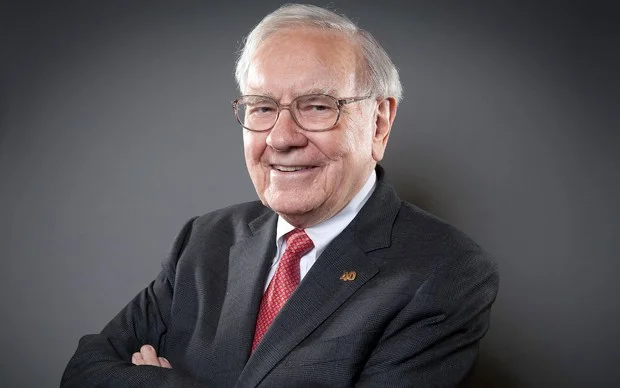
Eight things Warren Buffett says investors should do

When looking for advice about how to invest, who better to turn to than Warren Buffett? The man they call the Sage of Omaha is widely recognised as most successful, and highly respected, investor in the world.

Buffett is the chairman and CEO of Berkshire Hathaway, Although, in common with almost every other active money manager, the firm has failed to beat market since the global financial crisis, Berkshire Hathaway nevertheless delivered excellent returns for its shareholders over many decades prior to that.

Over the years, Buffett has passed on plenty of advice to ordinary investors, both in interviews and, in particular, in his annual letter to shareholders. It essentially breaks down into eight important lessons, each of which we’ve illustrated with quotes from Buffett himself.

1. Develop good habits

Buffett puts much of his success down to having good habits. It’s the same, he says, with saving and investing, and the earlier you develop them the better.

"The biggest mistake is not learning the habit of saving properly.”

“Do not save what is left after spending; instead spend what is left after saving.”

“Investing is an activity in which consumption today is foregone in an attempt to allow greater consumption at a later date.”

2. Think long term

Buffett is a longstanding critic of short-termism in the investing industry. Berkshire Hathaway’s favourite holding period, he once said, is forever.

“Someone's sitting in the shade today because someone planted a tree a long time ago.”

“I never attempt to make money on the stock market. I buy on the assumption that they could close the market the next day and not reopen it for five years.”

"No matter how great the talent or efforts, some things just take time. You can't produce a baby in one month by getting nine women pregnant.”

3. Ignore market forecasts

Hand in hand with Buffett’s long-term outlook goes his disdain for short-term market forecasts. No one, he says, can predict short-term market movements with any degree of accuracy.

“The only value of stock forecasters is to make fortune tellers look good.”

“Forecasts may tell you a great deal about the forecaster; they tell you nothing about the future.”

“Short-term market forecasts are poison and should be kept locked up in a safe place, away from children and also from grown-ups who behave in the market like children.”

4. Avoid salespeople

Buffett has repeatedly urged investors to be distrustful of salespeople — particularly those who claim to know which funds or sectors are going to outperform in the future.

“There’s been far, far, far more money made through salesmanship abilities than through investment abilities. And the people you pay to help identify (future outperformers) don’t know how to identify them. They do know how to sell you.”

“All the commercial push is behind telling you that you ought to think about doing something today that’s different than you did yesterday. You don’t have to do that. You just have to sit back and let American industry do its job for you.”

5. Know what you don’t know

Another important lesson that investors can learn from Warren Buffett is humility. Investors, he says, typically know less than they think they do — and pay the price for it.

“What counts for most people in investing is not how much they know, but rather how realistically they define what they don’t know.”

"Risk comes from not knowing what you're doing.”

6. Keep it simple

Buffett lives by a few simple rules, and he urges investors to do the same. Successful investing, he says, is far more simple than many investment professionals make it look.

“There seems to be some perverse human characteristic that likes to make easy things difficult.”

“You only have to do a very few things right in your life so long as you don't do too many things wrong."

7. Use low-cost index funds

Despite being a poster-boy for many in the active fund management industry, Buffett has consistently said over many years that investors are better off using low-cost index funds.

“Performance comes, performance goes. Fees never falter.”

“Both large and small investors should stick with low-cost index funds.”

"By periodically investing in an index fund, for example, the know-nothing investor can actually outperform most investment professionals. Paradoxically, when 'dumb' money acknowledges its limitations, it ceases to be dumb.”

8. Keep calm…

Perhaps the most important lesson Buffett teaches investors — and certainly the one he focuses on the most — is the importance of developing the right temperament.

“You’re dealing with a lot of silly people in the marketplace; it’s like a great big casino and everyone else is boozing. If you can stick with Pepsi, you should be OK.”

“The most important quality for an investor is temperament, not intellect. You need a temperament that neither derives great pleasure from being with the crowd or against the crowd.”

“What investors then need is an ability to both disregard mob fears or enthusiasms and to focus on a few simple fundamentals. A willingness to look unimaginative for a sustained period — or even to look foolish — is also essential.”

…when markets fall

"You shouldn't own common stocks if a 50% decrease in their value in a short period of time would cause you acute distress.”

“There is simply no telling how far stocks can fall in a short period. Even if your borrowings are small and your positions aren’t immediately threatened by the plunging market, your mind may well become rattled by scary headlines and breathless commentary. And an unsettled mind will not make good decisions.”

…and when they rise

"Equities will do well over time — you just have to avoid getting excited when other people are getting excited."

“Nothing sedates rationality like large doses of effortless money.”

That, in a nutshell, is what the world’s most famous investor says the rest of us should do in order to be successful investors.

No, investing isn’t always easy; that’s one of the reasons why you need a good adviser keep you on course to achieve your goals. But, take it from Warren Buffett, the basic ground rules are remarkably simple.

Check out more of the latest news from IFAMAX:

Pay less attention to weather forecasts

How women view money and investing differently

A little encouragement goes a long way

Ashton Chritchlow
Neil Woodford - A lesson in humility
neil-woodford.jpg

In the UK, Neil Woodford is investing Royalty. He famously outperformed his peers over many years as manager of the Invesco Perpetual Income Fund. When, five years ago this month, he set up his own fund, the Woodford Equity Income Fund, it was billed as the fund launch of the decade.

Alas, for tens of thousands of investors taken in by the PR and marketing hype, it hasn’t worked out as planned. The fund’s performance has been consistently dreadful and, one after another over the last few months, Woodford’s biggest clients have been withdrawing their money. 

Last Friday, the Kent County Council pension fund committee announced that it too decided to cut its losses, and yesterday, Woodford and his fellow executives took the highly unusual step of suspending trading in the fund, blocking further investor withdrawals until further notice.

Suddenly everyone has an opinion on Woodford and why the fund was doomed to fail. A simple Google search will show you that some of the commentators and publications putting the boot in now once waxed lyrical about his stock-picking expertise.

We have spoken many times about our scepticism of the Woodford cult (and active fund managers in general) — the fact you can invest in an index fund at a fraction of the cost and the odds of reproducing his previous performance were always heavily stacked against him. But we take no pleasure in his downfall.

If anything good is to come out of this sorry affair, we hope it’s that we all learn a little humility.

Hugely intelligent though we are sure Woodford is, the idea that one person can outwit the collective wisdom of millions of market participants requires an enormous leap of faith. Very few people beat the market any more, at least not on a cost- and risk-adjusted basis or over meaningful time periods. Since the global financial crisis, not even Warren Buffett has managed to do it.

We desperately want to believe there’s someone out there, in the massively complex and random world of finance, who knows what’s going and who really can predict the future. But that doesn’t mean that person exists. Even if they do exist, the overwhelming evidence is that they’re almost impossible to identify in advance.

Its time for reflection, time for us all to be a little more humble, and a little more honest with ourselves. We include advisers like ourselves in that, as well as analysts, consultants, journalists, investors and, yes, fund managers too.

Strange though it seems to feel sorry for a multi-millionaire, you could actually do so for Neil Woodford. When you’re fêted for years as a genius, it must be crushing to have it gradually dawn on you that you probably aren’t one after all.

Check out more of the latest news from IFAMAX:

Pay less attention to weather forecasts

How women view money and investing differently

A little encouragement goes a long way

Markets fell in 2018 – but keep this in perspective

Christmas eve delivered a present that most investors were not hoping for – the biggest fall on that specific day in history (at least in the US) of -2.7%.  That capped a fall in global markets of around -4% for the year.  That is hardly an investing disaster, especially as high-quality bonds held their own, as did global property.  It probably felt a lot worse a) because of the relentless negative news coverage of things like the risk of a US-China trade war and the knots that Parliament has tied itself in over Brexit and b) because the peak-to-trough fall was considerably more than this at around -11%.  From some of the newspaper headlines, one might think that we were experiencing calamitous times in the equity markets:

‘Global stock markets suffer worst losing streak for five years’. The Guardian (26th October 2018)

Or:

‘Stock market slide in 2018 leaves investors bruised and wary’ The Financial Times (31st December 2018)

Take a look at the chart below.  Looked at in isolation, one could easily get sucked into this kind of rhetoric that is aimed at selling newspapers (or these days, attracting clicks).

Figure 1: Global equity markets in 2018

Source: Albion Strategic Consulting. Financial Express © 2019. MSCI ACWI (net div.) in GBP 1/2018 to 12/2018

Source: Albion Strategic Consulting. Financial Express © 2019. MSCI ACWI (net div.) in GBP 1/2018 to 12/2018

Yet we need to keep a perspective on this.

First, over the 10 years since 2009 (the bottom of the market during the Credit Crisis) global markets have delivered positive returns in eight out of the ten calendar years. The last negative year for equities was back in 2011, when the markets were down around 7%. Over the history we have available to us – on average – one in three years deliver negative returns. Investors have, of late, been extremely lucky.

Second, over that period, in every single year, investors have suffered a fall from a previous market high and many of these were larger than 10%. However, even being invested from the start of 2008 and suffering the 35% peak-to-trough fall in 2008, an equity investor over that 11-year period would have turned £100 into £230, i.e. 8% compounded over 11 years, if they had been disciplined and patient (two areas of human weakness!). It’s at those times good advisers really come into their own, refusing to panic and rebalancing portfolios if needs be, buying equities when they are down – something that most investors won’t find easy emotionally, even though logic dictates that it makes good sense.

Figure 2: Every year, markets fall at some point – 2008 to 2018

Source: Albion Strategic Consulting. Financial Express © 2018. MSCI ACWI (net div.) in GBP 1/2008 to 12/2018.

Source: Albion Strategic Consulting. Financial Express © 2018. MSCI ACWI (net div.) in GBP 1/2008 to 12/2018.

Finally, as humans, we tend to have a strange view of what invested wealth represents and how we feel about it at any point in time.  We tend to be happy as wealth – at least on paper - goes up to some value at a specific point in time and unhappy when we reach that value again, if it is achieved after a market correction.  The figure below makes this point.

Figure 3: Human inconsistency around wealth

Source: Albion Strategic Consulting. Financial Express © 2019. MSCI ACWI (net div.) in GBP 1/2013 to 12/2018.

Source: Albion Strategic Consulting. Financial Express © 2019. MSCI ACWI (net div.) in GBP 1/2013 to 12/2018.

Remember, the true meaning of wealth is having the appropriate level of assets that you require, when you require them, to meet your financial and lifestyle goals.  In the interim, movements in value are noise, somewhat meaningless and part and parcel of investing.  When you invest in equities, you should try to avoid mentally banking the money you (appear to) make on the undulating, and sometimes precipitous, road you are on.  Remember too that the headline equity market numbers are unlikely to be your portfolio outcome, as most investors own some sort of a balance between bonds and equities.

Keeping things in perspective

Investing in equities is always going to be a game of two steps forward and one step back.  What equities deliver from one year to another is of little consequence to the long-term investor, who does not need all of their money back today.

As far as 2019 is concerned, no one who is honest knows what will happen in the markets.  The global economy is still set to grow by 3.5% above inflation this year, according to the IMF, which is not that bad.  Today market prices reflect the aggregate view of all investors based on the information to hand.  If new information comes out tomorrow, prices will adjust to reflect the impact this has on company valuations.  As the release of new information is, by definition, random so too must price movements be random, at least in the short-term.  Over the longer-term they reflect the real growth in earnings that companies deliver through their hard work, executing the delivery of their business strategies.  In the longer-term, investing in the stock market is a game worth playing, at least with part of your portfolio.

As Benjamin Graham – a legendary investor in the early 20th Century once said:

In the short run, the market is a voting machine but in the long run it is a weighing machine"

We could not agree more.


Other notes and risk warnings

Use of FE Analytics Data

© FE Analytics 2019. All rights reserved. The information contained herein is proprietary to FE Analytics and/or its content providers.  Past financial performance is no guarantee of future results.

Risk warnings

This article is distributed for educational purposes only and must not be considered to be investment advice or an offer of any security for sale. The reference to any products is made only to make educational points and must, in no circumstances, be deemed to be any form of product recommendation.

This article contains the opinions of the author but not necessarily the Firm and does not represent a recommendation of any particular security, strategy or investment product.  Information contained herein has been obtained from sources believed to be reliable but is not guaranteed. 

Past performance is not indicative of future results and no representation is made that the stated results will be replicated.

Errors and omissions excepted.

Max Tennant - February 2019

Check out more of the latest news from IFAMax:

Pay less attention to weather forecasts

How women view money and investing differently

A little encouragement goes a long way

Gethin Richards