
Can Crypto Wealth Fund Your Retirement? (Crypto Series 4)

Over the past few articles, we’ve explored the rise of crypto and how, for some early adopters, it has created significant wealth.
For a small number of investors, this has been life-changing.
But it also raises an important question:
Can crypto wealth realistically fund your retirement?
Crypto has proven it can build wealth.
The challenge is whether it can sustain it.
At Ifamax Wealth Management, we are increasingly working with clients who hold meaningful crypto positions. The conversation is now shifting—from growth to what comes next.
1. The Appeal of Crypto Wealth
There is no denying the appeal.
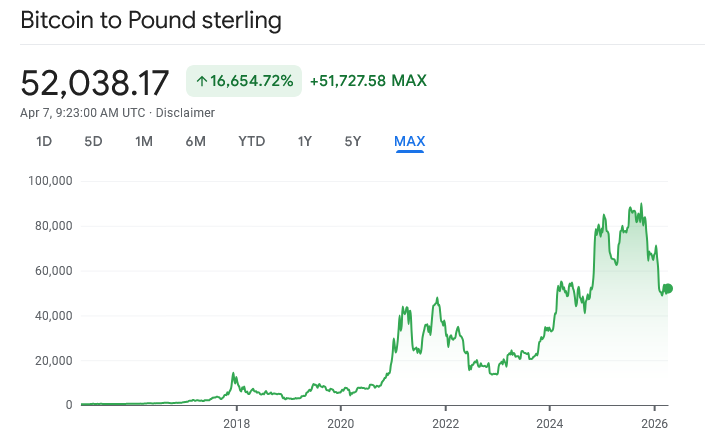
Stories of early adopters turning relatively small investments into substantial wealth are well known. These narratives continue to attract new investors hoping for similar outcomes.
We are also seeing these first-hand, new clients approaching us with significant crypto exposure, often built over several years.
However, there are two important realities:
Early gains were often driven by timing and adoption cycles
More recent investors may experience very different outcomes
Crypto has delivered strong returns over certain periods—but it has also experienced extreme volatility, with 50–70% declines not uncommon.
The same characteristics that create opportunity also introduce risk.
2. Retirement Planning Is Different From Wealth Accumulation
One of the biggest shifts in financial planning comes at retirement.
During accumulation, the focus is often:
Growth
Returns
Portfolio value
In retirement, the focus changes to:
Sustainable income
Longevity of capital
Stability
This introduces new risks:
Sequence risk – withdrawing during market falls
Volatility risk – large swings impacting income
Liquidity risk – needing to sell at the wrong time
“It’s one thing to build wealth. It’s another to rely on it.”
This is where crypto begins to present challenges.
3. The Key Challenges of Using Crypto for Retirement
a) Volatility
Crypto markets are inherently volatile.
Large price swings → unpredictable income
Sharp falls → increased drawdown risk
This makes it difficult to rely on crypto for a steady stream of retirement income.
b) Lack of Income
Unlike traditional assets:
Shares can pay dividends
Bonds provide interest
Crypto generally produces no natural income.
This means:
Income must be generated by selling assets
Timing becomes critical
In volatile markets, this creates additional pressure.
c) Regulatory & Tax Complexity
Crypto remains an evolving area within UK tax rules.
Subject to Capital Gains Tax (CGT)
Record-keeping requirements can be complex
No tax wrappers like ISAs or pensions
Compared to traditional investments, this creates additional planning challenges.
d) Behavioural Risk
This is often the most overlooked risk.
We commonly see:
Emotional attachment to gains
Reluctance to sell (“what if it goes higher?”)
Difficulty reducing exposure
In previous crypto articles, we highlighted that behaviour often drives outcomes more than markets.
This becomes even more important as retirement approaches.
4. Where Crypto Can Fit in a Financial Plan
Crypto is not inherently unsuitable.
But its role needs to be clearly defined.
For most investors, it is better viewed as:
A satellite allocation
A higher-risk growth component
Part of a diversified portfolio
A key principle from earlier articles still applies:
Only invest what you can afford to lose.
For early adopters, this becomes more complex—because what started as a small allocation may now represent a significant proportion of total wealth.
At this stage, planning often involves reducing concentration risk over time.
5. Turning Crypto Wealth Into Retirement Income
This is where financial planning becomes critical.
For clients with meaningful crypto holdings, we often focus on:
Gradual De-risking
Reducing exposure over time
Avoiding large, one-off decisions
Phased Reallocation
Moving capital into:
ISAs
Pensions
Diversified portfolios
Avoiding “All-or-Nothing” Decisions
Not exiting entirely at one point
Not remaining fully exposed
The focus shifts towards:
Income sustainability
Flexibility
Resilience under different scenarios
This aligns closely with broader retirement planning principles.
6. A Simple Framework for Clients
For those holding crypto and approaching retirement, a structured approach can help:
Define your lifestyle needs
Identify secure income sources (pensions, etc.)
Treat crypto as non-core / flexible capital
Build a clear withdrawal and diversification strategy
This moves the conversation from speculation to planning.
7. The Ifamax View
Crypto can play a role within a wider investment strategy.
But it carries risks that are often underestimated.
A useful starting point remains:
“How much can I afford to lose?”
As retirement approaches, the question changes:
“How do I make this sustainable?”
At Ifamax, our focus is on:
Reducing reliance on highly volatile assets
Building sustainable income strategies
Using diversified investments to support long-term outcomes
“The role of planning is not to maximise returns, but to make life work.”
Conclusion
Crypto may help build wealth.
But retirement planning is about turning wealth into something dependable, sustainable, and aligned to your life.
FAQs
Can crypto fund retirement in the UK?
Crypto can contribute to retirement wealth, but due to volatility and lack of income, it is rarely suitable as the sole foundation.
Is crypto too risky for retirement income?
Crypto carries significant volatility risk, which can make it challenging to rely on for consistent income.
How is crypto taxed in the UK for retirement planning?
Crypto is generally subject to Capital Gains Tax, with no access to tax-efficient wrappers like ISAs or pensions.
Should I sell crypto before retirement?
Many investors consider gradually reducing exposure as retirement approaches to improve stability and income sustainability.
If you’re holding crypto and considering retirement, we can help you understand how it fits into a broader plan.
In our next article, we explore how real assets such as equities and REITs can help balance crypto risk within a diversified portfolio.
Related Links
Important note
This article is distributed for educational purposes only and should not be considered investment advice or an offer of any security for sale. This article contains the opinions of the author but not necessarily the Firm and does not represent a recommendation of any particular security, strategy, or investment product. Reference to specific products is made only to help make educational points and does not constitute any form or recommendation or advice. Information contained herein has been obtained from sources believed to be reliable but is not guaranteed.
Article Written: April 2026, Tax Rates and Allowances May Change In The Future.