
When people think about retirement, they often picture a particular age.

Perhaps 60, 65 or the day they receive their State Pension.
But retirement rarely works quite so neatly. Some people look forward to stopping work as soon as they can. Others enjoy what they do and want to continue, perhaps on a part-time basis. For many, the decision will be shaped by health, family, financial security and simply what they want the next stage of life to look like.
So, will we all be working into our 70s?
Probably not. But the question is a useful reminder that retirement planning needs to be flexible enough to deal with a longer, less predictable future.
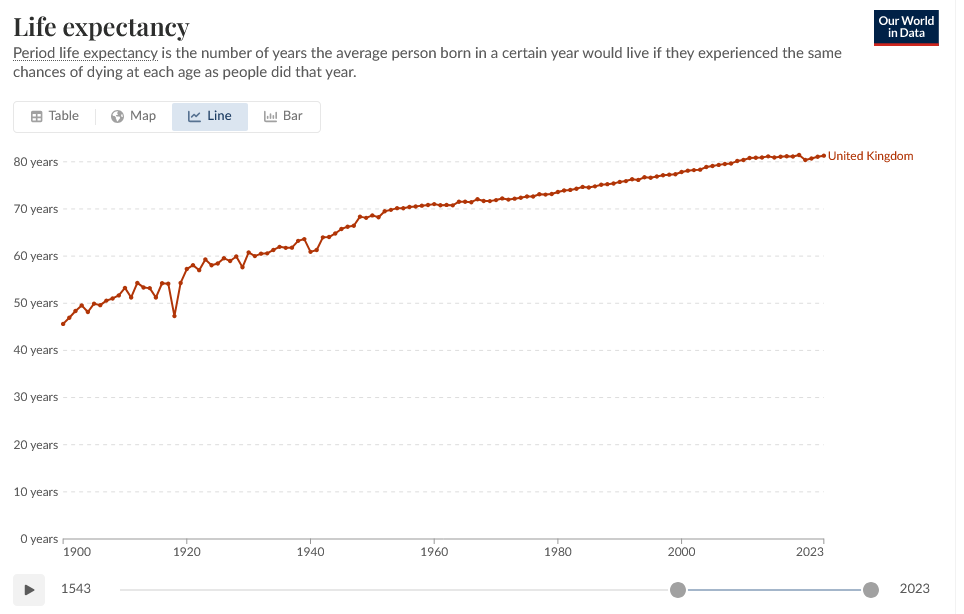
The chart does not tell us when any individual should retire. It does, however, show why it is sensible to think carefully about how long a retirement may last.
For someone retiring in their 60s today, it is entirely possible that their retirement could last 25 or even 30 years. That is a long time for a pension, investments and other assets to provide an income.
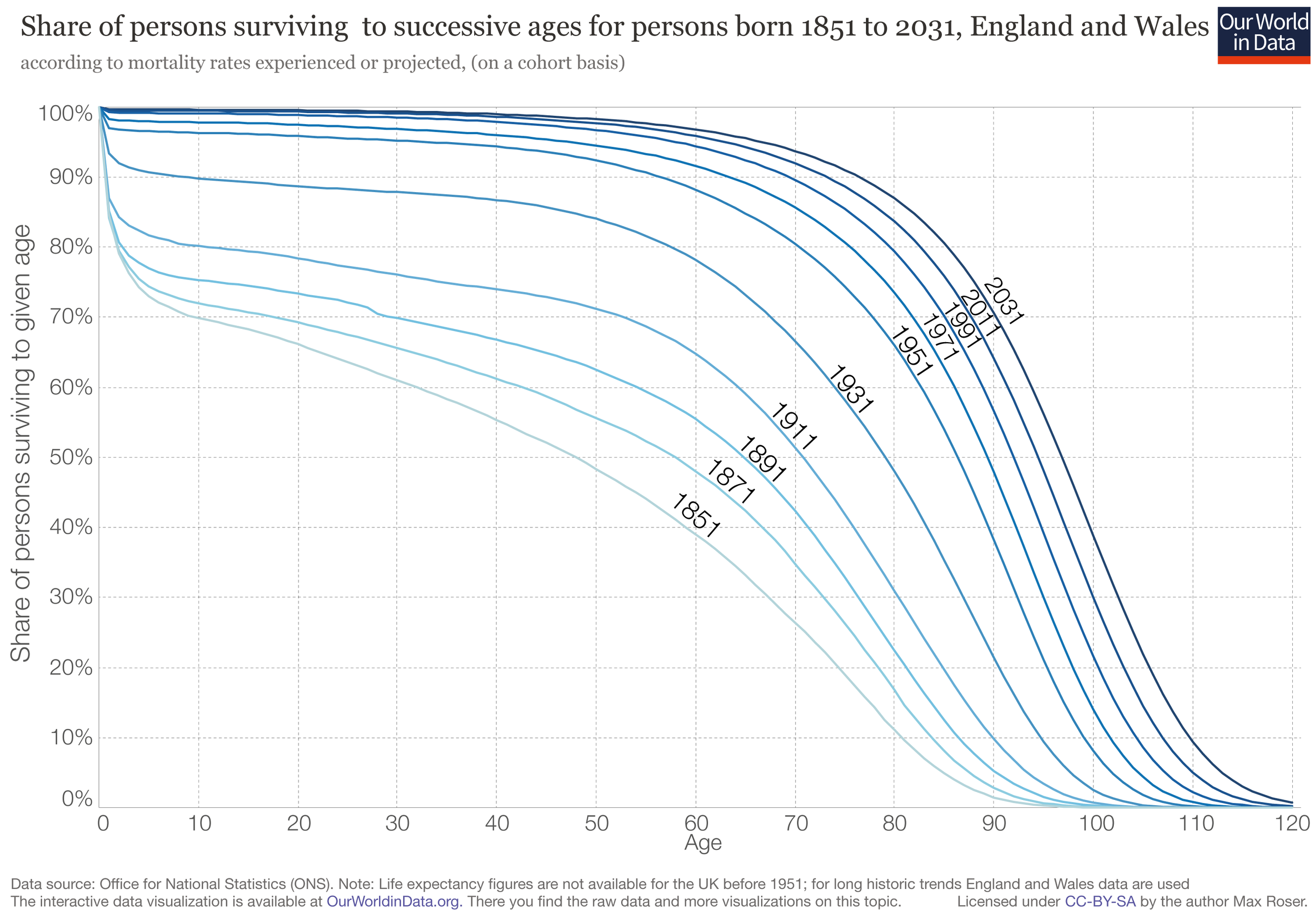
Previous generations often viewed retirement as a relatively short period after a long working life. For many people today, it can be a substantial chapter in its own right.
That is why the question is not simply, “When can I afford to stop working?”
It is also, “What sort of life do I want to have when I do?”
Retirement Income Is Becoming More Personal
In the past, more people could rely on an employer pension that provided a known income for life. That has changed considerably.
Many people now build retirement income through a combination of workplace pensions, personal pensions, investments, property and the State Pension. This gives greater flexibility, but it also means individuals carry more responsibility for the decisions they make.
The Pensions Policy Institute’s review of the last 50 years helps to show the scale of that change. In 1974, average private-sector employer and employee pension contributions were reported as 15%. In 2024, median contribution rates were 7.4%: 4% from employees and 3.4% from employers.
The figures are not a perfect like-for-like comparison, but the wider message is clear. Saving enough for retirement cannot simply be left to chance.
At the same time, retirement costs may not fall as much as people expect. Mortgage payments, rent, helping children or grandchildren, travel, care and lifestyle choices can all continue well into later life.
This does not mean retirement has to be a source of worry. It means that a good plan should be based on real life, rather than a single assumed retirement date.
Living Longer Does Not Always Mean Working Longer
There is another side to the longevity story.

Living longer is clearly positive. But it does not automatically mean we will all be able, or want, to continue working for longer.
Health can change. Caring responsibilities can arise. A job that feels enjoyable and manageable at 60 may feel very different at 70.
That is why a retirement plan should not rely on one fixed assumption, such as working until a particular age. It should give you choices.
For some people, that might mean building enough financial security to stop work earlier than expected. For others, it may mean gradually reducing hours, changing role or continuing to work because they enjoy the connection and purpose it brings.
The important thing is that the choice remains yours where possible.
What About the State Pension?
The State Pension remains an important part of retirement planning for many people, but it is not necessarily the point at which they will stop work.
Under current legislation, State Pension age is increasing from 66 to 67 between April 2026 and March 2028. It is then scheduled to reach 68 between April 2044 and March 2046. This timetable is reviewed periodically, so it is always worth checking your own State Pension age and forecast.
The State Pension provides a valuable foundation. However, for most people it will need to sit alongside workplace pensions, personal pensions, ISAs, investments and other assets.
It is also worth remembering that the age at which you can access a private pension and the age at which you receive the State Pension are not necessarily the same.
Will We All Work Into Our 70s?
No. Retirement will continue to be personal.
Some people will retire in their 50s or early 60s. Some will reduce their hours gradually. Others will work into their 70s, either because they need the income or because they genuinely enjoy what they do.
The aim of financial planning is not to predict every change in markets, tax rules, health or family life. That would be impossible.
It is to understand where you are now, explore the options available to you and build a plan that can adapt as life changes.
Retirement Planning Starts With Your Life
At Ifamax, we believe retirement planning should start with the person, not a pension product or a target age.
We take time to understand what matters to you: when you would like to have the option to stop work, how you want to spend your time, the people you want to support and the legacy you may want to leave.
From there, we can help bring together retirement income, investments, tax-efficient planning and your wider financial affairs into one clear plan.
The future of retirement may be changing. But with the right planning, you can have greater confidence that your finances will support the life you want to lead.
Important note
This article is distributed for educational purposes only and should not be considered investment advice or an offer of any security for sale. This article contains the opinions of the author but not necessarily the Firm and does not represent a recommendation of any particular security, strategy, or investment product. Reference to specific products is made only to help make educational points and does not constitute any form or recommendation or advice. Information contained herein has been obtained from sources believed to be reliable but is not guaranteed.
Article Written: October 2026, Tax Rates and Allowances may change in the future.
Useful Links
The Twelve Steps to Retirement
Sources
Our World in Data – life expectancy and survival data
Pensions Policy Institute – A 50-Year Retrospective of the UK Pensions Landscape, November 2024
GOV.UK – State Pension age timetable and State Pension forecast