
Autumn Budget 2026: What Does It Mean for Your Wealth and Financial Plan?
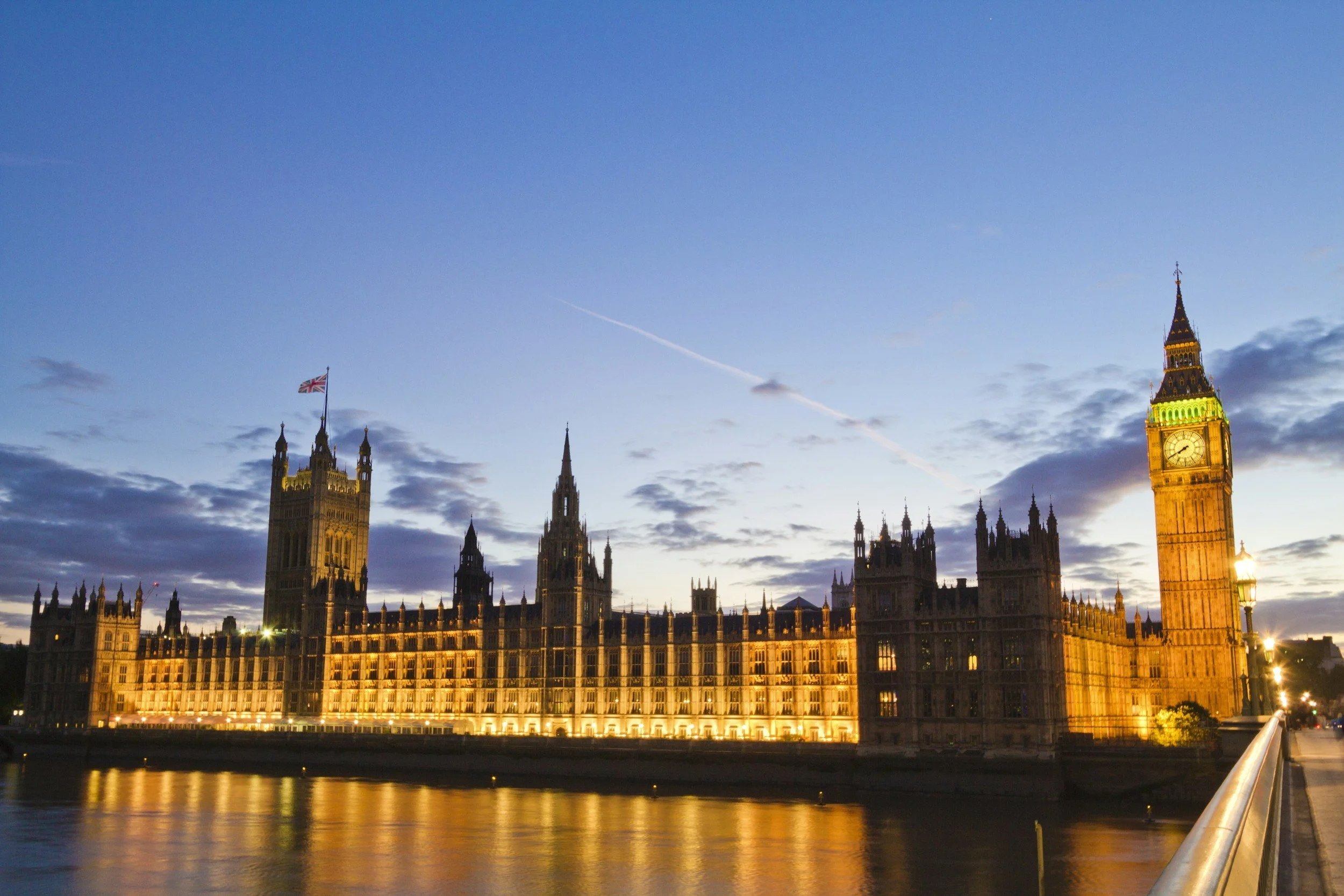
After weeks of speculation, the Chancellor delivered the Autumn Budget on Wednesday 28 October 2026.
Much of the discussion beforehand focused on potential changes to pensions, taxation, savings and inheritance. Some of those predictions have materialised, while others have not.
The Budget comes against a backdrop of global uncertainty, rising energy prices and pressure on the public finances. The government has announced measures to support households and businesses alongside changes that could affect how individuals grow, protect and pass on their wealth.
For those with substantial savings, investments, pensions or business interests, some of these changes deserve careful consideration.
However, at Ifamax Wealth Management, we believe the most important question is not simply what the Chancellor has announced.
It is what these changes mean for you, your family and the financial future you are working towards.
We have highlighted the measures we believe are particularly relevant to our clients, together with our thoughts on the implications for longer-term financial planning.
1. Higher Tax on Savings and Property Income
One of the more significant announcements concerns the taxation of income generated from savings and property.
From 6 April 2027, tax rates on savings and property income will increase by a further two percentage points.
The resulting rates will be:

The savings income rates will apply across the UK, while the property income rates will apply in England, Wales and Northern Ireland.
These changes follow increases already announced in the 2025 Budget.
For individuals holding significant cash deposits outside tax-efficient arrangements, the additional taxation may reduce the income they receive after tax.
Similarly, those with investment properties generating rental income could find that their tax position becomes less favourable.
Our thoughts: Looking Beyond the Tax Rate
For many of our clients, cash is an important part of their overall wealth.
It can provide security, meet short-term expenditure, fund planned purchases or support retirement income without needing to sell investments during difficult market conditions.
However, holding substantial sums in cash for long periods also creates challenges, particularly when inflation and taxation are taken into account.
These changes reinforce the value of reviewing how different assets are held.
That does not mean moving cash into investments simply to save tax. The appropriate balance depends on what the money is intended to achieve.
Effective wealth management means understanding the purpose of each asset and ensuring your cash, investments and pensions work together as part of one financial plan.
2. The £20,000 ISA Allowance Remains
Following considerable speculation, the government has confirmed that its proposed reduction in the cash ISA allowance will not go ahead.
The annual cash ISA allowance will remain at £20,000, within the overall £20,000 ISA subscription limit.
The government has also indicated that it will work with the investment industry to explore a new incentive for first-time Stocks and Shares ISA investors.
Further details are expected.
Our thoughts: Cash and Investments Have Different Roles
We welcome the decision to retain flexibility within ISAs.
For someone with substantial accumulated wealth, the annual ISA allowance may seem relatively modest. However, using tax-efficient allowances consistently over many years can make a meaningful difference.
An ISA allows investments and savings to grow free from UK Income Tax and Capital Gains Tax within the account.
Alongside pensions, ISAs can play an important role in retirement planning, particularly when deciding where future income should come from.
Cash ISAs may be appropriate for money needed in the shorter term, while Stocks and Shares ISAs may offer long-term growth potential, with investment risk.
Neither should be considered in isolation.
We believe the focus should be on building an appropriate balance of cash, pensions and investments that supports your wider financial objectives.
3. Retirement Planning and Changes to the State Pension
One of the more important longer-term announcements concerns the State Pension Triple Lock.
The government has confirmed that the existing Triple Lock will continue throughout this Parliament, with increases under the current formula through to April 2029.
Under the existing arrangement, the State Pension increases annually by the highest of inflation, average earnings growth or 2.5%.
However, from April 2030, the government intends to introduce an adjusted Triple Lock.
The State Pension will then increase by the highest of inflation, 2.5%, or the amount required to maintain its value relative to average earnings at the level reached in April 2029.
In simple terms, the government is seeking to prevent the State Pension from continually growing faster than earnings over the longer term.
Our thoughts: Retirement Could Last 30 Years or Longer
The State Pension is an important foundation of retirement income, but for many of our clients it will represent only part of their overall financial resources.
Retirement today can look very different from retirement a generation ago.
Some people hope to retire in their 50s. Others want to work into their 70s, perhaps gradually reducing their commitments.
What matters is having sufficient financial resources to support the retirement you want.
When we build retirement plans, we consider future expenditure, income, investment returns, taxation and inflation.
The State Pension is one element of that calculation, and changes to its future growth reinforce the importance of using realistic assumptions.
This is particularly relevant when retirement may last 25 or 30 years, or potentially longer.
We do not believe retirement planning should rely on predicting what future governments might do.
Instead, a good financial plan should be capable of adapting to changes in taxation, income and personal circumstances.
You can explore these themes further through our Twelve Steps to Retirement educational guides.
4. Pensions, Inheritance Tax and Passing on Wealth
For individuals and families concerned about preserving wealth for future generations, pensions and estate planning deserve particular attention.
The Budget included a change to the taxation of certain pension death benefits.
From 28 October 2026, the government is removing the existing two-year rule that could result in pension death benefits becoming taxable simply because they were paid more than two years after the pension holder's death.
This is a useful change for beneficiaries, although other taxation rules will continue to apply.
However, it is important to distinguish this announcement from the separate Inheritance Tax reforms affecting pensions.
Under legislation already introduced, most unused pension funds and pension death benefits will be included within an individual's estate for Inheritance Tax purposes from 6 April 2027.
This represents a significant change for families who have historically viewed pensions as a means of passing on wealth.
The Budget also included changes to the treatment of certain liabilities within trust arrangements for Inheritance Tax purposes.
Our thoughts: Estate Planning Is About More Than Tax
For many families, the question is not simply how much wealth they might leave behind.
It is about ensuring the right people receive financial support at the right time, while protecting their own financial independence.
The changes to pension taxation reinforce the importance of considering pensions alongside other assets when reviewing an estate plan.
This may include reviewing:
Pension beneficiary nominations and expressions of wishes.
Wills, trusts and existing gifting arrangements.
The potential Inheritance Tax position of the wider estate.
The financial security of a surviving spouse or partner.
How and when wealth might be passed to children or grandchildren.
We also believe estate planning should consider the practical arrangements that help families deal with financial matters when someone dies.
Having an organised estate, clear documentation and appropriate legal arrangements can be just as important as the tax considerations.
The starting point should be understanding what you want your wealth to achieve, both during your lifetime and for the people who matter to you.
5. Business Owners: Important Changes to Capital Gains Tax
For business owners, the Budget contained some particularly significant announcements.
Business Asset Disposal Relief
From 6 April 2027, the lifetime gains limit eligible for Business Asset Disposal Relief will reduce from £1 million to £500,000.
The relief currently provides a reduced Capital Gains Tax rate of 18% on qualifying gains.
This change could have important implications for business owners considering selling their company or disposing of a qualifying business interest.
A New Founders' Relief
The government also announced a new Capital Gains Tax Founders' Relief from 6 April 2027.
This is intended to provide a 10% Capital Gains Tax rate on up to £10 million of lifetime gains for qualifying founders of innovative, high-growth businesses.
The precise qualifying conditions remain subject to consultation.
Other Business Changes
The Budget also announced changes to capital allowances, employee share ownership arrangements and the taxation of smaller trading activities.
There are also technical reforms intended to simplify Venture Capital Trusts and Enterprise Investment Schemes, alongside stronger oversight of excessive fees.
These arrangements may provide opportunities for some investors, but their tax advantages must always be considered alongside the risks involved.
Our thoughts: Your Business May Be Your Largest Asset
For many successful business owners, the business represents a substantial proportion of their personal wealth.
The challenge is ensuring that the wealth created through the business can eventually support financial security outside it.
That may mean preparing for a sale, gradually reducing involvement, transferring ownership or retaining the business while developing other sources of income.
The reduction in Business Asset Disposal Relief may prompt some owners to review their intended exit strategy.
However, we would caution against making significant business decisions purely because of a change in taxation.
A business sale involves commercial considerations, legal arrangements, family circumstances and the question of what comes next.
For someone who has spent decades building a successful business, the financial planning process should consider how the proceeds might support retirement, investment strategies and future generations.
The value of a business is important, but so is having a clear plan for what happens to that wealth when your involvement in the business changes.
6. Helping Children and Grandchildren
The Budget also contained proposals to support first-time buyers.
From April 2029, the government intends to introduce a new First Time Buyer ISA, replacing the Lifetime ISA for new savers.
The proposed account will offer a 25% government bonus towards a qualifying first-home purchase, with a property value limit of £450,000 and a maximum government bonus of £20,000.
Existing Lifetime ISA holders will be able to continue using their accounts.
There are also proposals for a new government-backed equity loan scheme to help eligible first-time buyers.
Our thoughts: Supporting the Next Generation Without Compromising Your Future
Helping children and grandchildren financially is an increasingly important part of family wealth planning.
For some, this might mean helping with a property deposit. For others, it could involve education, business opportunities or making gifts during their lifetime.
However, giving money away is rarely just a tax decision.
Before making substantial gifts, it is important to understand how they might affect your own future financial security.
For example, will you still have enough to fund the retirement you want? What happens if future care costs are higher than anticipated? How might gifts affect other family members?
Cashflow modelling can help explore these questions and provide greater clarity about what may be affordable.
There can be considerable satisfaction in helping the next generation while you are alive to see the benefits.
The important consideration is ensuring that generosity today does not compromise your financial independence tomorrow.
7. Long-Term Care: A Change in Direction
The government has announced its intention to develop a National Care Service in England, providing personal care free at the point of use.
The proposed changes to the State Pension Triple Lock are expected to contribute towards funding this ambition.
The Independent Commission on Adult Social Care is now expected to report in 2027.
There is still considerable detail to establish, including when any changes might be introduced and precisely what costs would be covered.
Our thoughts: Planning for What We Cannot Predict
Long-term care is often one of the more difficult aspects of financial planning to discuss.
It may involve considering a future where we need additional support, a spouse requires care or circumstances change unexpectedly.
Nevertheless, the potential financial implications can be considerable.
For now, we believe it remains sensible to retain appropriate assumptions about future care expenditure.
As further details become available, financial plans can be reviewed to reflect the changing position.
8. Inflation, Household Costs and Investment Planning
The Budget also included measures intended to provide some relief from rising household costs.
These include extending the temporary 0% VAT rate on domestic electricity until July 2027, a £100 energy payment for eligible households in England and extending the existing fuel duty reduction until July 2027.
However, the wider economic outlook remains uncertain.
The Office for Budget Responsibility has forecast UK economic growth of 1.2% in 2026 and 1.0% in 2027.
Inflation, which reached 3.5% in September 2026, is expected to peak at 3.8% in the first quarter of 2027 before gradually declining.
These are forecasts rather than certainties.
Our thoughts: Preserving Purchasing Power Matters
For someone building wealth or drawing an income in retirement, inflation can be just as important as investment returns.
It affects the purchasing power of money and the amount of income required to maintain a desired standard of living.
Over a retirement potentially lasting three decades, even relatively modest differences in inflation can have a meaningful cumulative effect.
This reinforces the importance of a diversified investment approach, maintaining appropriate cash reserves and regularly reviewing how much income can sustainably be withdrawn.
At Ifamax, we believe investment strategies should be designed around the financial plan rather than reacting to short-term economic predictions.
Markets will respond to changes in economic expectations, government policy and interest rates.
But making significant changes to a long-term investment strategy in response to every announcement can create risks of its own.
What Should You Consider Following the Budget?
Not every Budget announcement requires action.
For some people, the changes may have little immediate effect. For others, particularly those with substantial savings, property investments, business interests or complex estate arrangements, a review may be worthwhile.
We believe three questions are especially useful:
Does the announcement materially affect my finances? A change to tax on savings, pensions or business disposals may have different implications depending on your circumstances.
Does it change what I am trying to achieve? Your retirement aspirations, financial independence and plans for your family may remain exactly the same, even if the rules change.
Does my existing financial plan need adjusting? Sometimes a change is appropriate. On other occasions, the existing plan may remain suitable.
A Budget is an opportunity to revisit assumptions, not necessarily a reason to make immediate decisions.
Our Final Thoughts: A Financial Plan Should Be Built to Adapt
In the weeks leading up to the Budget, there was considerable speculation about what might change.
This included suggestions about pensions, inheritance, cash ISAs and the taxation of investments.
Some predictions proved accurate. Others did not.
It is a useful reminder of why we believe financial planning should not be driven by speculation.
At Ifamax Wealth Management, our starting point is understanding what matters to you.
For some, it is having the freedom to retire. For others, it is stepping back from a business, enjoying the wealth they have accumulated, supporting their family or creating a legacy for future generations.
From there, we build a financial plan designed to bring together your assets, pensions, investments, income and tax position.
Governments will change. Tax legislation will change. Investment markets will rise and fall.
Your circumstances and priorities may change too.
The purpose of financial planning is not to predict every change. It is to build a plan that helps you make informed decisions and adapt with confidence as life unfolds.
As Bristol-based financial planners and wealth managers, we work with clients to help them grow, protect and pass on their wealth through thoughtful, ongoing financial planning.
If any of the Budget announcements raise questions about your existing arrangements, please get in touch with the Ifamax team. We would be pleased to discuss what the changes could mean for your circumstances and whether your financial plan needs reviewing.
Sources
HM Treasury: Budget 2026 – Breathing Space for Today, Fresh Hope for the Future, 28 October 2026.
HM Revenue & Customs: Inheritance Tax on Pensions – Technical Note.
Important information: This article is for general information and educational purposes only and does not constitute personal financial advice or an individual recommendation. Some Budget announcements remain subject to consultation, legislation or further details. Tax treatment depends on individual circumstances and may change. The value of investments can fall as well as rise, and you may receive back less than you invest.